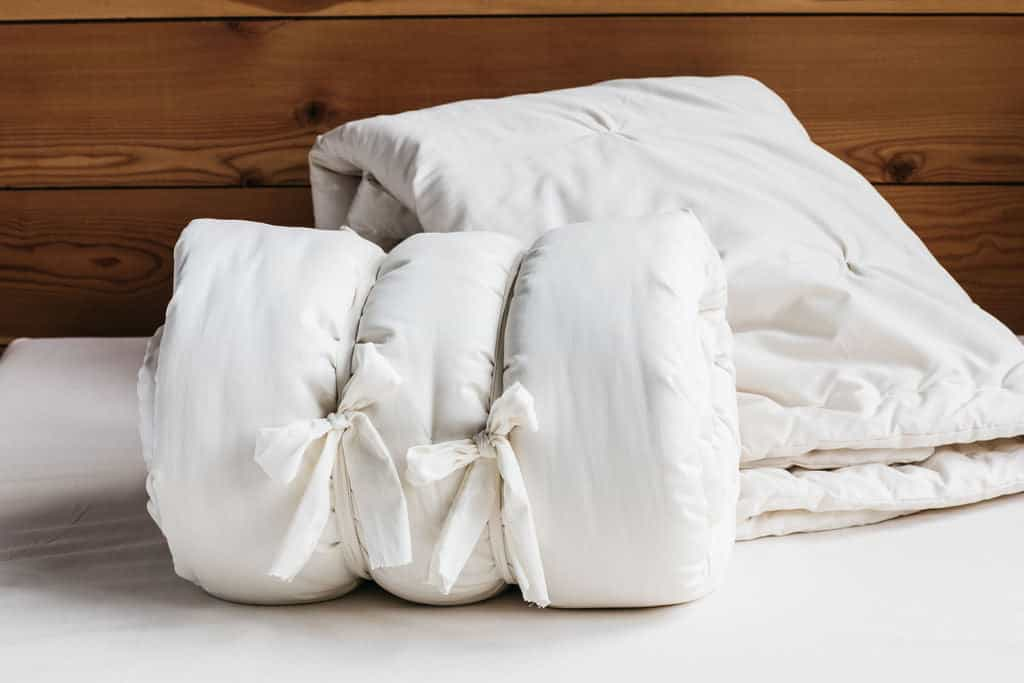
Comforters provide essential warmth and insulation for varied sleeping environments, combining insulating fibers with breathable fabrics to regulate temperature. The category highlights materials like natural silk and responsibly sourced fillings, emphasizing how fiber choice impacts warmth-to-weight ratio, moisture management, and overall sleep comfort. Key terms such as bedding and comforters appear in context to clarify use and performance expectations.
Natural silk comforters offer unique benefits, including hypoallergenic properties, smooth thermal regulation, and reduced bunching or shifting during the night. Their lightweight fill enables year-round use, while silk’s moisture-wicking capabilities help maintain a balanced microclimate. This makes them suitable for sensitive skin and those seeking durable, breathable bedding solutions.
The DownTown Company Natural Silk Year Round Comforter exemplifies silk-filled warmth with a design focused on even loft and compact packing. Features often include a plush outer shell, stitch-through construction to minimize cold spots, and silk insulation that adapts to ambient temperature, supporting uninterrupted rest in varying climates.
In evaluating comforters, consider fill power, overall fill weight, and shell fabric weave, as these influence warmth, drape, and durability. Silk-filled options generally provide crisp, lightweight coverage that resists clumping, while still delivering lasting warmth. Understanding these characteristics helps align bedding choices with individual sleep preferences and seasonal changes.
Across the category, relevance to related bedding components—sheets, pillows, and travel pillows—highlights the holistic approach to bedding quality. Silk comforters pair with complementary textiles to improve thermal balance and comfort, while maintaining easy care and long-term performance for restful, consistent sleep. Keywords like bedding and comforters reinforce the educational focus on product relevance.
 Bedding